Neak Pean, meaning “coiled snake” in Khmer, is a fascinating and enigmatic temple located within Angkor, Cambodia. Its intricate carvings and unique architectural style set it apart from other Angkorian structures, making it a captivating destination for history buffs and curious travelers alike.
A Serpent’s Embrace: The Temple’s Name and Symbolism
The name Neak Pean, derived from its central feature, a large artificial island surrounded by a moat, beautifully evokes the image of a coiled serpent. This symbolism is deeply intertwined with Hindu cosmology, relating to the mythical Naga, powerful serpent deities associated with water and fertility. 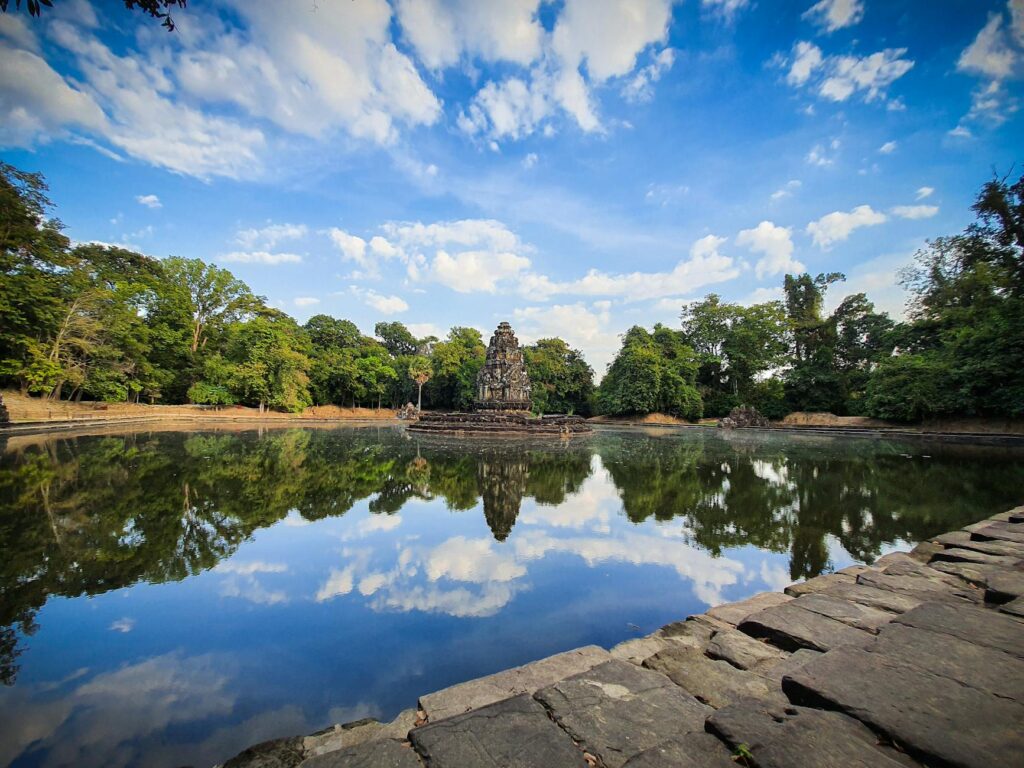 The island itself is designed to represent Mount Meru, the sacred cosmic mountain at the heart of the universe, reinforcing the temple’s spiritual significance. Learn more about Angkorian symbolism.
Architectural Marvels: Design and Construction
Neak Pean’s architecture is rather unique among Angkorian temples. Unlike many others, it’s not a large complex of buildings but instead, centers around that man-made island within the water. This unusual design speaks to its specific religious function. The intricate carvings depicting scenes from Hindu mythology, particularly those related to the churning of the cosmic ocean, are incredibly detailed and show the high level of skill of the ancient Khmer artisans. The precise methods of construction remain a subject of ongoing research, making the temple even more intriguing to scholars. Read more about Angkorian architecture.
Spiritual Significance: A Healing Sanctuary
Neak Pean wasn’t just a place of worship; it was believed to be a healing sanctuary. The temple’s association with water and the Naga further emphasizes this, as water held significant medicinal and cleansing properties in ancient Khmer belief. This is supported by evidence suggesting the temple may have been used for therapeutic purposes. The presence of medicinal plants further supports this idea. Explore the religious beliefs of Angkor.
A Glimpse into History: The Temple’s Decline and Rediscovery
Like many other Angkorian temples, Neak Pean fell into disrepair after centuries of neglect. The reasons for its decline are complex, linked to shifts in religious practices and political power. However, its rediscovery and subsequent restoration efforts have allowed us to appreciate its extraordinary beauty and historical significance once more. [IMAGE_3_HERE] Further research continues to shed light on its history and purpose. Discover more about the history of Angkor.
Visiting Neak Pean: Practical Information
Visiting Neak Pean is a rewarding experience, offering a unique perspective on the complexity and artistry of Angkorian culture. You can access it as part of a broader tour of the Angkor area. It’s recommended to hire a guide to gain a deeper understanding of the temple’s history and symbolism. Remember to dress respectfully. [IMAGE_4_HERE] For the best experience, plan your visit during the cooler months. Check out travel guides for Angkor.
Neak Pean stands as a testament to the ingenuity and spiritual depth of the ancient Khmer civilization. Its unique design, symbolic imagery, and historical context provide a compelling narrative that continues to fascinate and inspire.
Frequently Asked Questions
What is the meaning of Neak Pean? Neak Pean means “coiled snake” in Khmer, referencing the temple’s central island and its symbolic connection to Naga, serpent deities.
What is the temple’s significance? It was believed to be a sacred healing sanctuary, linked to water’s medicinal properties and Hindu cosmology.
How can I visit Neak Pean? Neak Pean is located within the Angkor complex and is accessible by tuk-tuk or as part of a guided tour.
When is the best time to visit? The cooler, dry season (November to April) offers the most pleasant conditions for exploring the temple.
What should I wear to visit? Dress respectfully, as it is a sacred site.

